


Council Minster approves Ratification Amendment of the Kyoto Protocol

DILI, 01 june 2022 (TATOLI) – The eighth Constitutional Government of Timor – Leste, led by Prime Minister Taur Matan Ruak, through the council Ministers meeting on wednesday has approved a proposal from the National Parliament (NP) regarding the ratification of the Doha Amendment of the Kyoto Protocol.
This proposal was presented by the Minister of Foreign Affairs and Cooperation (MoFAC), Adaljiza Albertina Xavier Reis Magno.
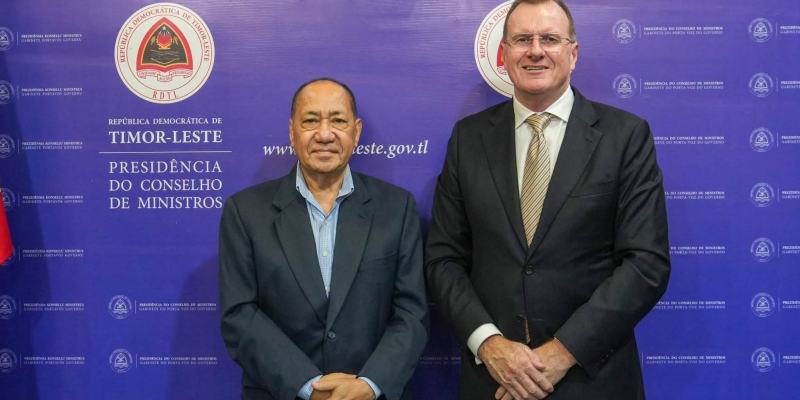
A spokesperson for the Government and the Minister of the Presidency of Council Ministers, Fidelis Manuel Magalhães, said that the Kyoto Protocol is one of the international treatments signed by the countries in the world to commit to reducing gas emissions that cause gas stoves in the atmosphere.
“The Amendment of Doha Protocol is also an important contribution to raising awareness and mobilization regarding the need and demand for a global effort to combat the alteration of climate change, in particular reducing gas emissions that result in 5% of stoves in the world,’’ the Minister of the Presidency of Council Ministers, Fidelis Manuel Magalhães told reporters at the Minister of Finance, Aitarak- Laran on wednesday.
At the moment the amendment has been ratified by 147 countries in the world.
The Kyoto Protocol was adopted on 11 December 1997. Owing to a complex ratification process, it entered into force on 16 February 2005. Currently, there are 192 Parties to the Kyoto Protocol.
In short, the Kyoto Protocol operationalizes the United Nations Framework Convention on Climate Change by committing industrialized countries and economies in transition to limit and reduce greenhouse gas (GHG) emissions following agreed individual targets. The Convention itself only asks those countries to adopt policies and measures on mitigation and to report periodically.
The Kyoto Protocol is based on the principles and provisions of the Convention and follows its annex-based structure. It only binds developed countries and places a heavier burden on them under the principle of “common but differentiated responsibility and respective capabilities”, because it recognizes that they are largely responsible for the current high levels of GHG emissions in the atmosphere.
Journalist : Camilio de Sousa
Editor : Nelia Borges