


DILI, 23 december 2025 (TATOLI) – Prime Minister Xanana Gusmão highlighted the important role of the media in Timor-Leste, describing it as both a tool for civic education and a way to keep political power in check.
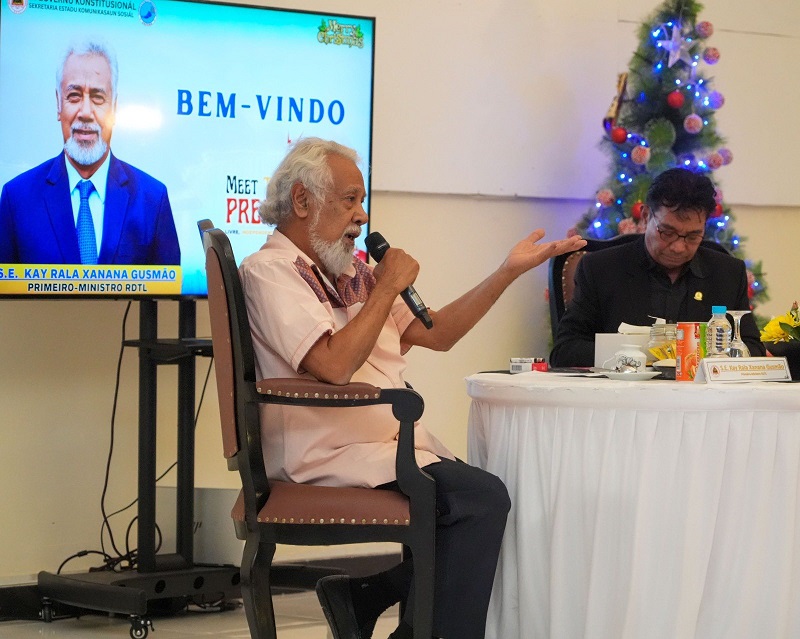
He made the remarks yesterday during the Meet the Press program at the National Elections Commission Hall in Dili, under the theme “The Role of Media as a Pillar of Democracy in the State-Building Process.” The event brought together government officials, journalists, and academics.
Drawing on his 50 years of experience in journalism, Gusmão said that Timor-Leste’s media has come a long way—from serving as a voice of resistance during the country’s struggle for independence to now educating the public, raising national awareness, and holding leaders accountable.
“The media is the voice of the people. It should report both the good and the bad, always respecting freedom of expression and democratic responsibility,” he said.
Gusmão added that the media acts as a bridge between the government and citizens, helping people follow elections, public policies, and national debates through radio, print, TV, and digital platforms.
Prime Minister Xanana Gusmão stressed that press freedom is guaranteed by the constitution, but it must be used responsibly to encourage constructive debate, prevent authoritarianism, and curb abuses of power.
He urged journalists to focus on data-driven reporting, thorough analysis, and context, producing journalism that informs and educates rather than chasing social media trends.
On Timor-Leste’s recent entry into ASEAN, he encouraged media professionals to deepen their understanding of the regional integration process and explain its real benefits to the public, helping people make informed decisions and find practical solutions.
Gusmão also rejected the idea that journalism’s role is just to monitor the government. He called for reporting that offers informed opinions, investigative work, and in-depth analysis on key sectors like agriculture, health, public finance, and anti-corruption.
He highlighted the challenges posed by new technologies, including artificial intelligence, and urged journalists to sharpen their critical thinking, keep track of global developments, and evaluate Timor-Leste’s standing in democracy, human rights, and development.
Acknowledging the financial and professional hurdles journalists face, he called for perseverance, ethical reporting, and public trust through independent, rigorous journalism. He also stressed the importance of collaboration among media outlets and covering local issues more closely as decentralization progresses.
Gusmão encouraged journalists to strengthen their knowledge, analytical skills, and global perspective in 2026, reaffirming his confidence in the media as a driving force for society, especially youth, and as a key pillar for democracy and peace in Timor-Leste.
Journalist: Afonso do Rosário
Editor: Isaura Lemos de Deus
Translation: Camilio de Sousa