


Ramos-Horta highlights Fidel Castro’s friendship with Timor-Leste on centenary of Cuban leader’s birth
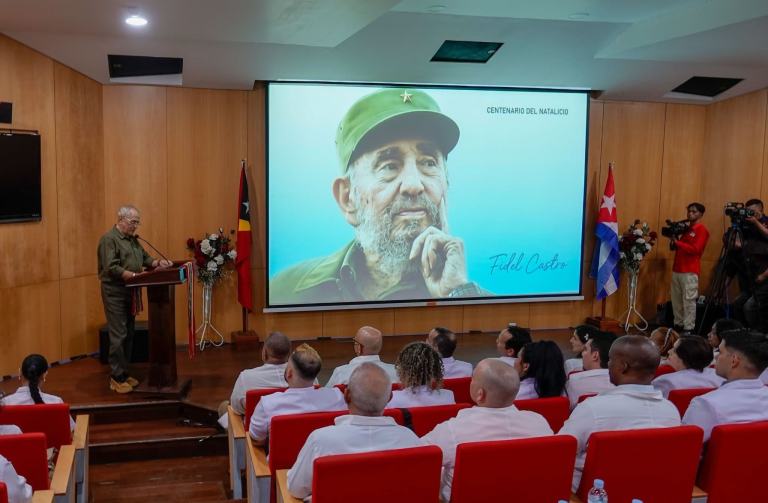
DÍLI, 11 August 2026 (TATOLI) – President José Ramos-Horta praised the contribution of former Cuban leader Fidel Castro to Timor-Leste, describing him as a “great friend of Timor-Leste” and calling for dialogue and cooperation as alternatives to Cuba’s isolation and sanctions.
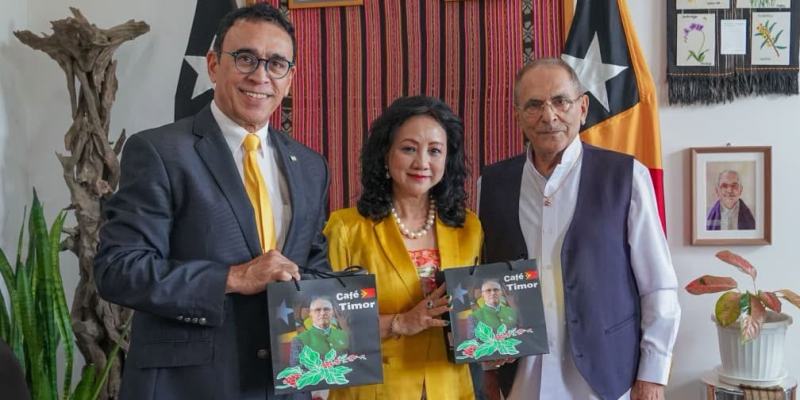
Ramos-Horta made the remarks during commemorations marking the centenary of Castro’s birth at the Timorese Resistance Archive and Museum in Dili.
The president recalled meeting Castro in Kuala Lumpur, Malaysia, in 2003, alongside then-President Xanana Gusmão, shortly after Timor-Leste restored its independence and was facing major needs, particularly in healthcare and human-resource development.
“Fidel understood this reality, and Cuba responded with concrete action,” Ramos-Horta said.
He highlighted Cuba’s deployment of hundreds of doctors and other medical professionals to Timor-Leste, as well as the training of young Timorese in Cuba following independence.
Ramos-Horta said the cooperation had helped train hundreds of Timorese doctors and strengthen the country’s national healthcare capacity.
The bilateral cooperation also extended to education, particularly through Cuba’s Yo, sí puedo literacy programme, which helped thousands of Timorese acquire basic reading and writing skills.
“Cuba did not only give us assistance; it helped us train our people,” Ramos-Horta said, describing the development of Timorese professionals as a legacy that goes beyond any particular political moment.
He also recalled how Cuban professionals remained alongside patients and communities in Timor-Leste during difficult periods.
“Solidarity is not measured only by what we do when everything is going well. It is measured by what we do when others are going through difficult times. That is what Cuba did for Timor-Leste,” he said.
Ramos-Horta also expressed concern about Cuba’s economic and energy situation, citing repeated power outages, fuel shortages and difficulties accessing essential goods.
He said the situation was affecting the Cuban population and placing pressure on essential services, including healthcare and water supplies.
The president said Cuba’s legacy of international solidarity should continue to inspire those working in cooperation among nations, healthcare, education and the defence of human dignity.
“It is these people — doctors, teachers, technicians, volunteers, humanitarian workers and so many others — who turn solidarity into concrete action and bring peoples closer together,” he said.
“It is through them that friendship between nations becomes a reality,” Ramos-Horta added.
Fidel Castro was born on August 13, 1926, in Birán, Cuba, and died on Nov. 25, 2016, in Havana, aged 90.
He served as Cuba’s prime minister from 1959 to 1976 and subsequently as president of the Council of State and Council of Ministers from 1976 to 2008.
Castro also served as first secretary of the Communist Party of Cuba from 1965 to 2011 and was commander-in-chief of Cuba’s Revolutionary Armed Forces for decades.
TATOLI