


Science for Development Summit 2026 kicks off in Díli
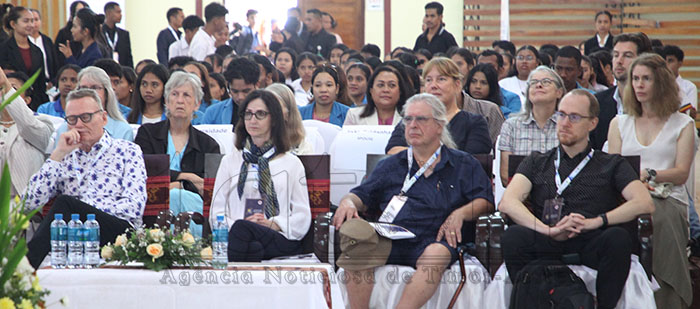
DÍLI, 24 August 2026 (TAOLI) – An initiative of President Jose Ramos-Horta, the 1996 Nobel Peace Laureate, the summit brings together Nobel Laureates, Turing Award winners, scientists, innovators, thinkers, educators, researchers and leaders from around the world in what is the largest scientific gathering ever held in Southeast Asia.
Held under the joint patronage of President Jose Ramos-Horta and Prime Minister Kay Rala Xanana Gusmão, the summit is fully funded by the Government of Timor-Leste.
The Science for Development Summit 2026 is part of a series of strategic national events in August 2026 designed to elevate Timor-Leste’s international profile and advance sustainable development through education, diplomacy, and international cooperation.
By bridging global knowledge with local experience, the event reflects Timor-Leste’s deliberate choice to place a young, resilient nation at the centre of global scientific dialogue. It is a powerful demonstration of the country’s ambition to transform itself from a consumer of knowledge into a producer of it, with science and innovation serving as foundational pillars for future development.
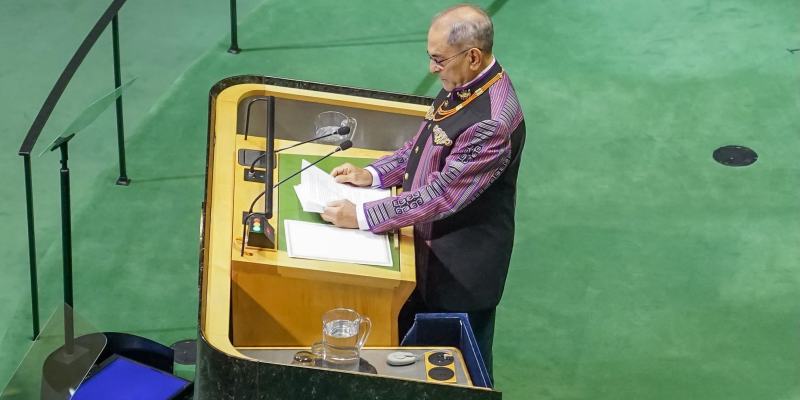
In his opening address, President Ramos-Horta welcomed global experts with gratitude and a bold vision that Timor-Leste must evolve from consuming knowledge to creating it, merging science with local ingenuity to build a national culture in which knowledge becomes the foundation of lasting development.
“Your Excellencies, distinguished Nobel Laureates, scientists, researchers, and honored international guests, I welcome you all to Timor-Leste. Your presence here is a profound gesture of confidence in our nation and in the potential of our people,” said the President.
He said that the summit is not merely a gathering, it is a declaration that Timor-Leste is ready to move beyond consuming knowledge to creating it.
“We must transform our extraordinary natural and human diversity into solutions for agriculture, health, education, and sustainable prosperity. Science must serve our people, and our young people must know that the future of this nation will be built not by governments alone, but by your curiosity, courage, and dreams,” Ramos-Horta stressed.
He said: “Let this Summit give rise not only to partnerships and research, but to a new national culture that values knowledge as the foundation of our enduring development. Thank you for sharing your time, your wisdom, and your vision with us. May this shared endeavour inspire lasting bonds and a brighter future for all.”
The first official day of the summit featured a series of high-level panel discussions examining the role of science in national development.
Panel 1 – Science in Service of Development
Moderated by Helder da Costa, this panel featured Nobel Laureates Frances H. Arnold (Nobel Prize in Chemistry 2018) and Brian P. Schmidt (Nobel Prize in Physics 2011). The discussion explored how frontier science translates into tangible benefits for a country like Timor-Leste. Professor Arnold’s work on directed evolution demonstrated how fundamental biology can lead to practical applications in clean energy and manufacturing, while Professor Schmidt’s experience in building international research collaborations provided a model for Timor-Leste to scale its scientific capacity through global partnerships.
Panel 2 – Science and Economic Transformation
Moderated by Helder Lopes, this panel brought together Nobel Laureates in Economic Sciences, Robert C. Merton (1997) and James A. Robinson (2024), University Professor at the University of Chicago. The discussion centred on how Timor-Leste can leverage its national wealth to build lasting productive capability. Professor Merton offered expertise on managing financial risk in a small, import-dependent economy, while Professor Robinson emphasised his institutional theory of prosperity, arguing that inclusive institutions are the bedrock for translating resource wealth into broad-based development.
Panel 3 – Feeding and Sustaining the Planet
Moderated by Edmundo S. S. Viegas, this panel addressed Timor-Leste’s critical food security challenges. Plant scientist and agricultural innovation leader Howard-Yana Shapiro highlighted the importance of crop diversity and sustainable agricultural innovation, while former Governor of South Carolina and former Executive Director of the United Nations World Food Programme (WFP) David Beasley, who led the organisation when it was awarded the 2020 Nobel Peace Prize, provided an operational perspective on food systems, resilience, and the urgent need to address chronic malnutrition.
Panel 4 – Health and Human Development
Moderated by Joao S. Martins, this panel brings Medicine Nobel laureates Sir Tim Hunt (2001) and Fred Ramsdell (2025) examine how Timor-Leste can build health-research capability that complements global biomedical discovery. Hunt’s cyclin discovery illustrates how fundamental biology creates long-term foundations for medicine, while Ramsdell’s work on immune tolerance demonstrates the translation pathway from genetic discovery to therapeutic development.
The Science for Development Summit 2026 runs concurrently with the Sci-Tech Expo 2026, alongside a series of parallel sessions and engagements taking place across Dili, organised by Timorese universities, government institutions, and other partner organisations.
The first day of the summit concluded with a Welcome Reception Dinner at the Palácio Nobre Lahane.
The Science for Development Summit 2026 continues tomorrow, 25 August, with high-level panel discussions on digital security, artificial intelligence, and science education. The event is a cornerstone of Timor-Leste’s strategy to embed science, technology, and innovation at the heart of its development agenda, paving the way for a future where knowledge drives economic growth and improves the lives of all Timorese citizens.
For more information about the Science for Development Summit 2026, please visit: https://www.sciencefordevelopment26-tl.com
TATOLI