


Ramos-Horta: Science must be at heart of Timor-Leste’s development

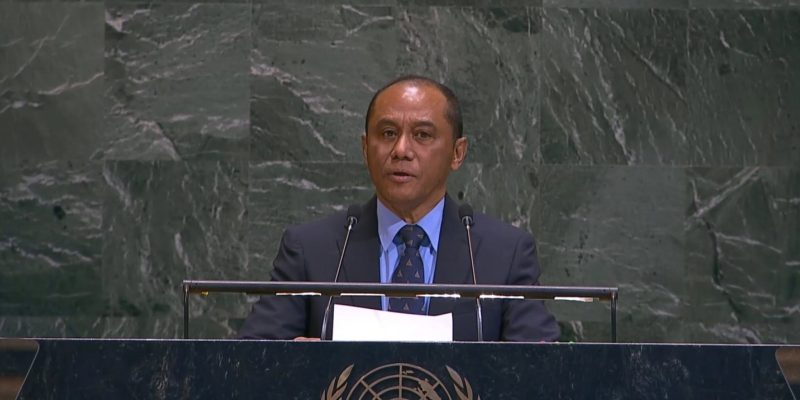
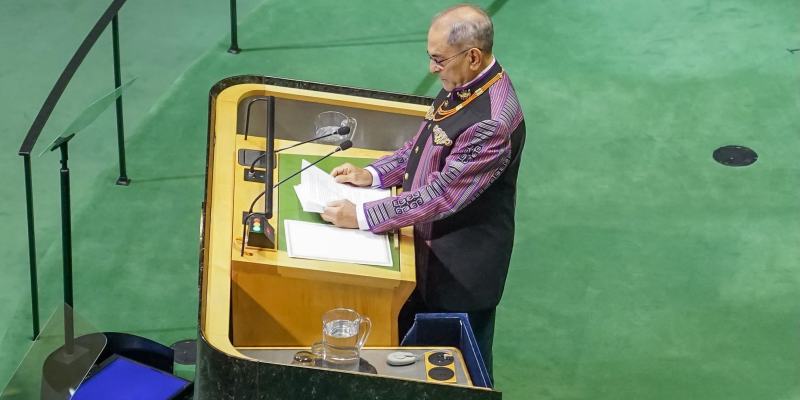
DÍLI, 25 August 2026 (TATOLI) — President José Ramos-Horta has called for science and innovation to be placed at the centre of Timor-Leste’s development, stressing that scientific progress must deliver practical benefits to ordinary people rather than remain concentrated among wealthy countries and institutions.
Closing the Science for Development Summit in Dili on Tuesday, Ramos-Horta said scientific advances had transformed human life but posed a fundamental question: how could those advances reach the people who needed them most?
“For science to serve humanity, its benefits cannot belong only to the countries, universities, companies or individuals who can best afford them,” he said.
The President said scientific discoveries made thousands of kilometres away could have a direct impact on Timorese communities, from farmers seeking ways to protect crops from drought to mothers looking for better healthcare and teachers trying to improve learning.
He said science became a tool for development when knowledge and experience were adapted to local needs.
“When we restored our independence, we had to rebuild institutions, schools, roads, clinics and an economy. We have made enormous progress,” Ramos-Horta said.
“Yet poverty, malnutrition, food insecurity and unequal access to opportunity remain challenges that cannot be solved by economic growth alone.”
He said addressing those challenges would require stronger education, research and knowledge, as well as the willingness to apply scientific findings to the everyday problems facing communities.
Making science accessible
Ramos-Horta stressed that knowledge alone was not enough, saying scientific research must reach the communities that need it most.
He called for affordable technology, research partnerships that strengthen local capacity and greater opportunities for scientists from developing countries to establish institutions and conduct research independently.
“Research partnerships must build local capacity rather than permanent dependence,” he said.
The President also urged Timorese students and young people not to see science as something reserved for wealthy or technologically advanced countries.
“Do not imagine that science belongs to somebody else,” he said. “Do not imagine that discovery happens only in Boston, Oxford, Singapore, Tokyo or Beijing.”
He said the ability to observe, question, experiment and imagine was shared by all people and urged young Timorese to have confidence in their own potential.
Timor-Leste’s scientific potential
Ramos-Horta highlighted Timor-Leste’s marine biodiversity, unique ecosystems, agricultural traditions, languages and indigenous knowledge as assets that could contribute to scientific research and innovation.
He also pointed to the country’s geographical position between Southeast Asia and the Pacific and its young population as opportunities for future development.
For a young country such as Timor-Leste, he said, embracing innovation should go hand in hand with building domestic knowledge, institutions and human resources.
The goal, he said, should be for Timor-Leste to move beyond being a consumer of technologies developed elsewhere and become increasingly involved in creating solutions suited to its own needs.
“Development is ultimately about people and the sharing of ideas,” Ramos-Horta said.
Proposal for science advisory network
Ramos-Horta also proposed the creation of a Timor-Leste Advisory Council on Science, Technology and Development to maintain links between international experts, the Government, universities, researchers and young people.
He stressed that the proposed body should not become a formal or burdensome institution, but instead function as a flexible network for continued cooperation and exchange.
“There should be no heavy structures or obligations,” he said.
The network could facilitate activities ranging from virtual lectures and advice on specific challenges to introductions between institutions, research partnerships and informal exchanges of ideas.
Ramos-Horta said even modest contributions from scientists and experts with extensive knowledge and experience could have a significant impact on a young country such as Timor-Leste.
Inspiring the next generation
The President said he hoped the summit would encourage more young Timorese to pursue careers in science and research.
He told students attending the event that they could one day take the stage themselves, sharing discoveries and knowledge that could contribute to the country’s development and inspire future generations.
“Perhaps, one day, we will all be learning from you,” he said.
Ramos-Horta concluded by stressing that scientific progress should be accompanied by wisdom and shared more broadly so that its opportunities and benefits were not limited to a privileged few.
TATOLI