


ASEAN hosts Phnom Penh workshop to help traditional media navigate digital transformation
PHNOM PENH, 26 August 2026 (TATOLI) – The Association of Southeast Asian Nations (ASEAN), through the ASEAN Committee on Culture and Information (ASEAN-COCI) in collaboration with the Ministry of Information of the Kingdom of Cambodia, is hosting the regional workshop titled “Minimizing Negative Impacts of Digital Transformation in Traditional Media” from August 26 to 28, 2026, at the Sunway Hotel in Phnom Penh, Cambodia.
The event gathers national delegates from ASEAN Member States, representatives from the ASEAN Secretariat, media experts, media practitioners from across the region, and journalists, including from Timor-Leste’s news agency, TATOLI, I.P and its head of the delegation. The workshop addresses critical challenges facing traditional media institutions, including print, radio, and television, amid rapid technological advancements.
During the opening session on Wednesday (26/08), Has Sam Ath, Under Secretary of State at the Ministry of Information of Cambodia and Chairperson of ASEAN-COCI/SOMRI Cambodia, highlighted that digital platform have fundamentally changed the way information is created, distributed, and consumed.
“While digital transformation is inevitable and necessary, its negative externalities must be actively managed through sound policy, cross-sectoral collaboration, and capacity building,” Has Sam Ath stated.
Traditional media plays an irreplaceable role in preserving public interest, safeguarding cultural identity, and fostering an informed citizenry.”
He emphasized that the primary objective of the workshop is not to resist digital progress, but to equip traditional media organizations to adapt, innovate, and thrive within a digital-first ecosystem without sacrificing their core integrity.
Three proposed action points for the ASEAN Region
To address these ongoing disruptions, Has Sam Ath proposed three core action items for consideration by the delegates.
- Identify Core Challenges: Clearly map the primary difficulties facing traditional media across different ASEAN Member States regarding sustainability, regulation, and ethics.
- Exchange Best Practices: Share concrete regional experiences on digital adaptation, fair compensation models, and fact-checking mechanisms.
- Formulate Regional Strategies: Develop cohesive regional strategies to foster a balanced, resilient, and responsible media environment that supports traditional media institutions through this transition.
Safeguarding public trust and professional ethics
Concurrently, Sles Alfin, Under Secretary of State at the Ministry of Information and Chairman of SCI Cambodia, pointed out that while digital transformation presents immense opportunities, it brings severe economic and financial pressures upon traditional newsrooms.
Alfin noted that advertising revenues continue to shift toward digital platforms, while misinformation and disinformation spread at unprecedented speeds. The rapid advancement of artificial intelligence adds another layer of complexity to the ecosystem.
“We are now confronted with new and increasingly difficult questions concerning AI-generated content, deepfakes, synthetic media, content authenticity, copyright, professional ethics, and perhaps most importantly, public trust,” Sles Alfin highlighted.
Recognizing that regulatory frameworks and technological capacities differ across ASEAN Member States, Alfin stressed that the underlying challenges remain shared. He posed a central question to the delegation
“The challenge before us is therefore not simply how to adopt new technologies. The bigger question is: How can we embrace digital transformation while protecting the credibility, sustainability, professionalism, and public-service role of traditional media?” Alfin asked.
The future of regional media
In closing, both speakers affirmed that while the future of media is undeniably digital, the objective must be to manage this transition responsibly, strategically, and inclusively.
During the first day of workshop, delegates from ASEAN Member States, comprising Indonesia, Malaysia, the Philippines, Myanmar, Timor-Leste, Brunei Darussalam, and host nation Cambodia, presented and shared their experiences under the theme “Minimizing Negative Impacts of Digital Transformation in Traditional Media.” Presentations addressed the current status and trends of the traditional media landscape, national policies, legal and regulatory frameworks, digital transformation initiatives, best practices, key challenges, emerging issues, future priorities, and regional cooperation.
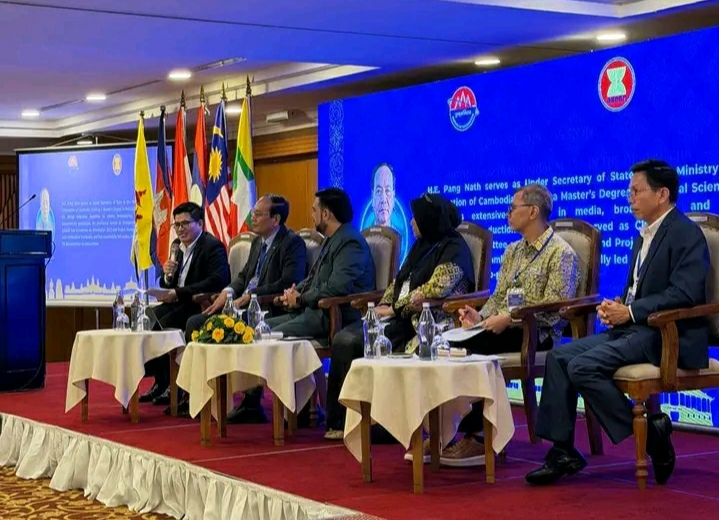
On the sidelines of the event, a panel discussion was held on “Strengthening Traditional Media in the Digital Era Through Policy, Innovation, and Capacity Building.” The discussion featured experts and media practitioners, including Pang Nath, Under Secretary of State at the Ministry of Information of Cambodia; Syed Nabeel Tirmazi, Senior AI Manager at DataCity; Dewi Susilorini Kusumoningrum, Associate Public Relations Officer at the Ministry of Communication and Digital Affairs of Indonesia; Alex Reza Shariman Otman, TV Programme Director at RTM Malaysia; and Sambo Vannarith, Under Secretary of State at the Ministry of Information of Cambodia.
The workshop is fully supported financially by the ASEAN Committee on Culture and Information (ASEAN-COCI) and the COCI Sub-committee on Information to strengthen regional solidarity and build media resilience across Southeast Asia.
TATOLI