


The Imbalance Between Equality and Liberty in Modern Democracy: How It Can Hinder Economic Growth
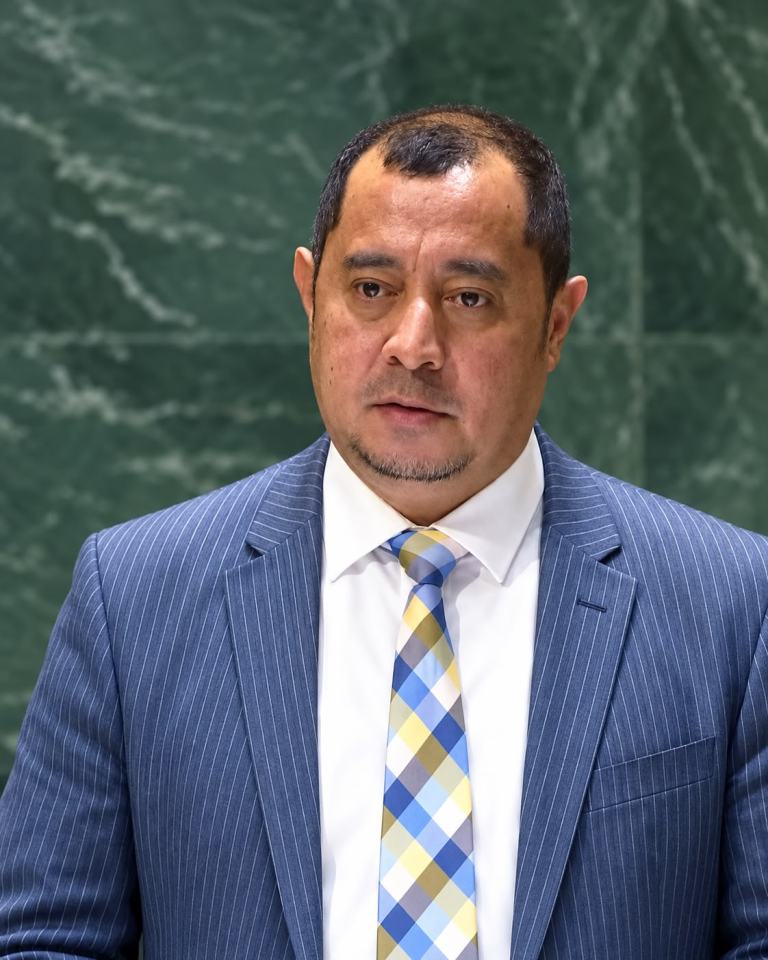
By : Joaquim Chaves
Modern democracy is built on two powerful ideals: equality and liberty. Equality seeks to guarantee equal dignity, political rights and fair opportunity. Liberty protects individual freedom, private property, entrepreneurship and economic choice. Both are essential, but when either is pushed too far, the balance can break down.
If governments pursue equality in ways that weaken investment, initiative and economic freedom, growth can suffer. But if liberty becomes little more than unrestricted economic freedom, inequality can become so severe that social mobility, opportunity and political stability deteriorate. The real challenge is not choosing between equality and liberty, but keeping them in productive balance.
This tension is not new. Alexis de Tocqueville warned that democratic societies could become so attached to equality that they might accept greater state control. John Stuart Mill emphasized liberty as essential to creativity, experimentation and progress. Their concerns remain highly relevant to modern economies.
Democratic governments face legitimate pressure to reduce poverty and inequality. Citizens expect access to education, healthcare, infrastructure and social protection. The problem begins when equality is interpreted mainly as equality of outcome rather than equality of opportunity.
Economic activity naturally produces different outcomes because people differ in skills, ambition, resources and willingness to take risks. Trying to eliminate too much of this difference through excessive taxation, regulation or redistribution can weaken the incentives that drive investment, entrepreneurship and productivity.
Entrepreneurs take risks because success brings rewards. Investors commit capital because they expect returns. Workers build skills because greater productivity can improve their prospects. When public policy weakens these incentives too far, economic dynamism declines.
Friedrich Hayek warned that governments seeking to engineer specific economic outcomes may gradually expand control over individual and market decisions. This does not mean that taxation, regulation or social protection are unnecessary. The real question is whether government intervention expands opportunity and productive capacity or simply redistributes existing wealth.
A society cannot sustainably distribute wealth unless it continues creating it.
This is why social policy should focus on empowerment. Investment in education, healthcare, infrastructure, technology, vocational skills and access to finance can reduce inequality while strengthening economic participation.
Amartya Sen’s work on human capabilities is useful here. Formal liberty means little if people lack the practical ability to use it. A citizen may be legally free to start a business, but that freedom is limited without access to credit, transport, education or electricity.
For the same reason, excessive inequality can also hinder growth. When wealth, credit and opportunity become concentrated among a narrow elite, formal economic freedom can mask real exclusion. Markets dominated by monopolies, political connections or inherited privilege are neither fully free nor genuinely fair.
John Rawls argued that inequality need not disappear entirely, but institutions should preserve fair equality of opportunity. A successful democracy therefore does not need identical economic outcomes. It needs to prevent wealth differences from becoming permanent barriers to education, entrepreneurship and social mobility.
Democratic politics can make this balance harder. Electoral systems often reward immediate benefits more than long-term investment. Governments may expand subsidies, transfers or public employment because their effects are visible quickly, while infrastructure, education and industrial development take years to produce results.
This can be especially damaging in developing democracies, where resources are limited and social needs are high. Redistribution may provide short-term relief, but it cannot substitute for economic transformation.
The better approach is to distinguish between spending that temporarily increases consumption and investment that expands productive capacity. Roads connect farmers to markets. Reliable electricity supports businesses. Quality education improves lifetime opportunities. Digital infrastructure widens access to markets. Finance can turn potential entrepreneurs into employers.
These forms of public investment promote equality without suppressing liberty.
Economic liberty, however, should not be confused with the absence of government. Markets depend on strong institutions. Property rights must be secure, contracts enforceable, competition fair, corruption controlled and regulation predictable.
Without these foundations, economic freedom can become a privilege reserved for the wealthy or politically connected.
The role of democratic government is therefore neither to control economic life completely nor to withdraw from it. It should create the conditions in which citizens can generate prosperity while ensuring that opportunity is not monopolized by a narrow group.
Three priorities are essential: equality of opportunity rather than equality of outcome; economic liberty protected by strong institutions; and public spending focused on long-term productive capacity.
Democracy should not promise that everyone will achieve the same economic result. Differences arising from effort, innovation and risk-taking are part of a dynamic economy. But neither should a person’s prospects be permanently determined by birth, wealth or political connections.
A healthy democracy therefore requires what might be called inclusive liberty: the freedom to work, invest, innovate and succeed within a system that gives a broad share of society a genuine chance to participate.
Without liberty, the pursuit of equality can lead to stagnation and excessive state control. Without meaningful equality of opportunity, liberty can become privilege for those who already possess wealth and influence.
Modern democracy prospers when equality and liberty reinforce rather than undermine each other. Economic growth should not require abandoning social justice, and social justice should not require suppressing economic freedom.
The strongest democratic economies are those that combine freedom with fairness, initiative with opportunity, and individual ambition with national development.