


Zhao Chuang: Qinzhou serves as China’s gateway for cooperation with ASEAN

QINZHOU, 15 September 2026 (TATOLI) — Vice Mayor of the Qinzhou Municipal People’s Government, Zhao Chuang, highlighted Qinzhou’s strategic position as China’s gateway for strengthening connectivity, trade, and economic cooperation with ASEAN countries.
Zhao made the remarks during a dinner reception with a delegation of journalists from ASEAN countries at the Qinzhou Tianjiao International Hotel on Tuesday evening. The gathering took place after the journalists completed a series of visits to several strategic locations across Qinzhou.

“Located at the centre of Guangxi Beibu Gulf economic zone, Qingzhou serves as the seaport for the three main routes of the new international land-sea trade corridor and stands at the forefront for China’s opening up to and cooperation with ASEAN,” Zhao said.
He noted that Qinzhou’s geographical position will become increasingly strategic with the development of the Pinglu Canal, which is designed to create a shorter, more economical, and convenient river-sea intermodal transport route connecting southwest China with ASEAN. For a developing nation like Timor-Leste, observing such massive regional infrastructure projects offers valuable insights into modernizing national logistics networks and expanding international maritime trade connectivity.
Zhao described the Pinglu Canal as an important project embodying a century-old dream that will further unlock Qinzhou’s potential as a major gateway and trade hub.
“This golden waterway, embodying a century-old dream, will create the shortest, most economical and convenient river-sea intermodal transport corridor linking southwest China with ASEAN. Upon its opening, Qingzhou’s geographic strength as a gateway hub will be fully unleashed,” he said.
Zhao explained that the economic impact associated with the development of the Pinglu Canal is already beginning to emerge in Qinzhou.
“Since the start of this year, five manufacturing enterprises have confirmed plans to invest over 10 billion yuan in Qingzhou during the 15th five-year plan period. In the first half of the year, Qingzhou’s GDP grew by 7.2%, ranking first in Guangxi Zhuang Autonomous Region,” he said.
In addition to strengthening connectivity, Qinzhou is developing industrial clusters focused on green petrochemicals, new energy materials, and equipment manufacturing.
The city is also home to several national-level platforms for opening-up, including the China-Malaysia Qinzhou Industrial Park and the Qinzhou Port area of the pilot free trade zone, which serve as important platforms for industrial collaboration as well as economic and trade exchanges between China and ASEAN. These industrial zones provide practical blueprints for bilateral and multilateral trade partnerships that emerging economies can look to as reference models.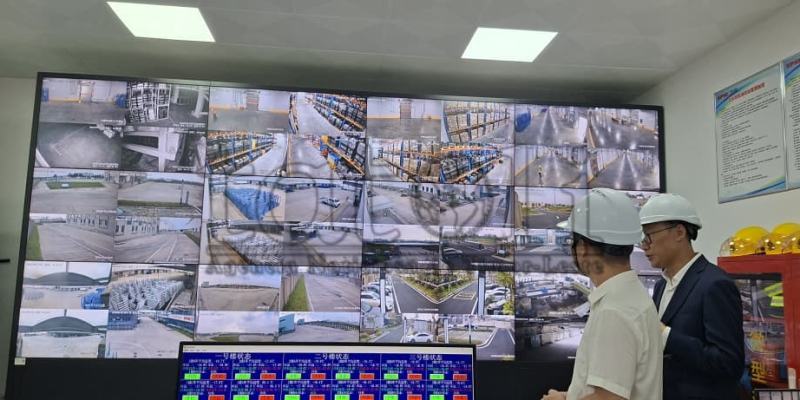
Before attending the dinner reception, the ASEAN media delegation visited the Qinzhou Port Base of the Western Land-Sea New Corridor Integrated Cold Chain Logistics. The facility supports the storage, processing, and distribution of temperature-sensitive products, including fruits, meat, and seafood, showcasing advanced cold-chain management that is vital for handling perishable export items.
The delegation also visited Qinzhou Blue Bay to observe the development and conservation of coastal ecosystems, including mangroves, before exploring the city’s local cultural heritage at the Qinzhou Nixing Pottery Museum, where participants had the opportunity to experience traditional pottery making and carving.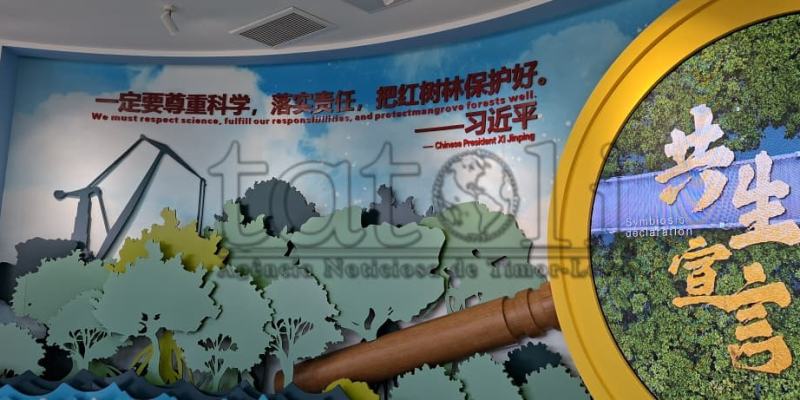
In his remarks, Zhao also emphasized the role of ASEAN journalists in introducing Qinzhou’s development to the international community. He noted that the media not only disseminates information but can also serve as a vital bridge for cultural exchanges and regional cooperation.
“Most importantly, you serve as a crucial bridge linking Qingzhou to the world and helping the world know the city of Qingzhou,” he said.
Zhao expressed hope that the journalists would gain first-hand insights into Qinzhou’s development during their visit and share stories about the city, including its cooperation opportunities and friendship with ASEAN, with audiences in their respective countries.
Meanwhile, National Broadcasting Services of Thailand (NBT) journalist Maneenat Onpanna, speaking on behalf of the ASEAN media delegation, expressed appreciation for the warm welcome extended by the Qinzhou Municipal Government. 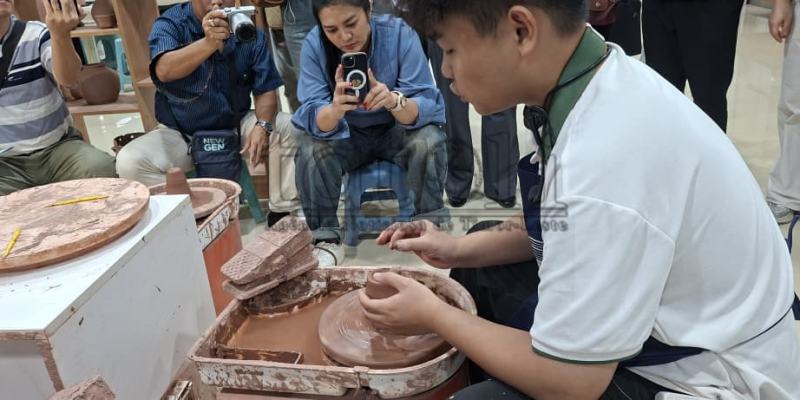
She said the visit provided journalists with an opportunity to see first-hand the development of the coastal city, including the role of Qinzhou Port in international trade routes connecting China with Southeast Asia and global markets.
“Hope that the journalists would bring home more stories about Qinzhou and share them with people across ASEAN countries,” she said.
The dinner reception concluded the ASEAN media delegation’s first-day program in Qinzhou. The participants were scheduled to continue their activities in the city before returning to Nanning to attend a series of events related to the China-ASEAN Expo (CAEXPO) and the China-ASEAN Business and Investment Summit (CABIS).
Journalist: Cidalia Fátima
Editor: Rafael Ximenes de A. Belo