


After four days exploring Guangxi, ASEAN journalists continue journey to Fujian
NANNING,19 September 2026 (TATOLI) — After four days exploring culture, the environment, infrastructure development, trade, and technological innovation in China’s Guangxi Zhuang Autonomous Region, a delegation of ASEAN journalists continued their journey to Fujian Province on Saturday for the next stage of the ASEAN Media Workshop.
The Guangxi leg of the program concluded with a farewell banquet hosted by the Foreign Affairs Office of the Guangxi Zhuang Autonomous Region at the Sky Bar on the 52nd floor of the Ming Du Lakeside Hotel in Nanning on Friday evening, Sept. 18.
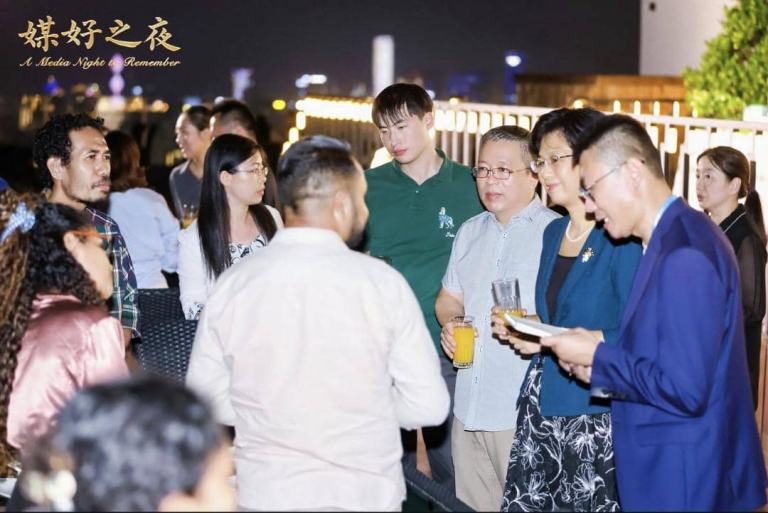
The dinner was held in a warm and friendly atmosphere and continued until around 9:00 p.m. local time. After several days of traveling together, the event also gave participants an opportunity to share experiences, strengthen friendships, and build networks with fellow journalists from ASEAN countries and their Chinese counterparts.
Liang Ying, Deputy Director General of the Guangxi Foreign Affairs Office, expressed appreciation to the journalists who had traveled from different countries to experience Guangxi and learn about China-ASEAN cooperation firsthand.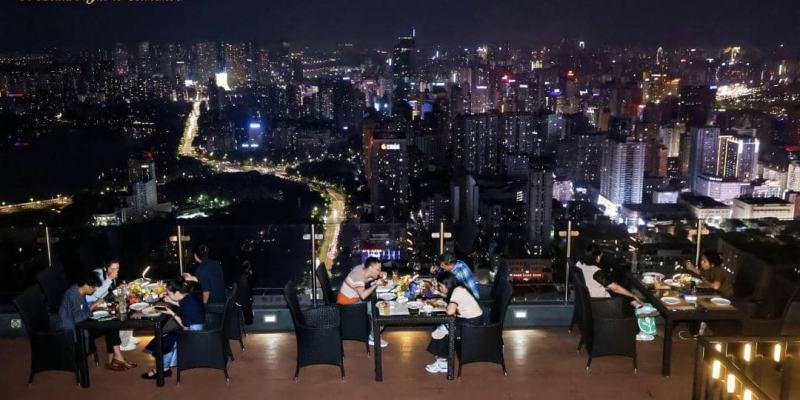
She said the journalists’ visit coincided with important developments in Guangxi, including the Pinglu Canal and the successful holding of the 23rd China-ASEAN Expo (CAEXPO).
“The waters of the Pinglu Canal start from the mountains of Guangxi, flow to the Beibu Gulf, then to the South China Sea, and on to the hometowns of each of you,” Liang Ying said.
“These are waters of connectivity, opportunity, and friendship,” she added.
Liang Ying also highlighted CAEXPO as an important platform connecting Guangxi and China with ASEAN countries and the wider world.
“The platform of the China-ASEAN Expo starts from Nanning of Guangxi, connects ASEAN countries, links with the wider world, and leads to our shared future. It is a bridge of cooperation, mutual benefit, and people-to-people bonds,” she said.
According to Liang Ying, the four-day visit allowed the journalists to experience different aspects of Guangxi, from its ecological landscapes and cultural heritage to industrial development and technological innovation.
“In just four days of visits, you have experienced the gentle beauty of ecological mountains and rivers, the vigorous vitality of industry and technological innovation, and more importantly, the sincere friendship of good neighborliness and mutual benefit between China and ASEAN,” she said.
She expressed hope that the media would continue to serve as a bridge between China and ASEAN by strengthening mutual understanding and bringing stories of regional cooperation closer to the public.
“Looking ahead, we hope to continue to use the media as a bridge and sincerity as a bond to jointly write more beautiful stories of mutual understanding, companionship, and shared prosperity between China and ASEAN,” Liang Ying said.
During the banquet, Timor-Leste journalist Domingos Tilman delivered remarks on behalf of the ASEAN media delegation.
Domingos expressed gratitude to the China International Press Communication Center (CIPCC) and the Foreign Affairs Office of Guangxi for organizing the program and warmly welcoming the participants.
“As a journalist from Timor-Leste and Timor-Leste as the ASEAN’s newest family member, it is a privilege to experience this region alongside my ASEAN colleagues,” Domingos said.
He said the journey through Guangxi had shown participants a powerful combination of cultural heritage and modern development, ranging from Nixing pottery and ethnic music to the Pinglu Canal, Beibu Gulf Smart Port, and the China-ASEAN Artificial Intelligence Application Cooperation Center.
Domingos highlighted the Pinglu Canal as one of the most memorable parts of the visit, saying the infrastructure demonstrated the importance of connectivity in facilitating regional trade.
He also emphasized that journalists have an important responsibility to help people understand how infrastructure, trade, and diplomacy affect communities across national borders.
“As media professionals, our role goes beyond reporting facts—we build bridges. We translate infrastructure, trade, and diplomacy into stories that connect real people across borders,” he said.
Domingos expressed hope that the visit would mark the beginning of deeper media exchanges, joint coverage, and institutional cooperation between ASEAN newsrooms and Chinese media partners.
Four days discovering Guangxi
The delegation began its field activities on Sept. 15 in Nanning with visits to Guangxi Arts University and the Guangxi Ethnic Music Museum, followed by the Museum of Guangxi Zhuang Autonomous Region, where participants learned about the region’s music, culture, and history.
From Nanning, the delegation traveled to Qinzhou, where participants visited the Blue Bay Mangrove Nature Reserve, Qinzhou Port, which is connected to the Western Land-Sea New Corridor, and the Qinzhou Nixing Pottery Museum and Experience Center.
On Sept. 16, the journalists visited the Beibu Gulf Smart Port Innovation Center, Guangxi CNGR New Energy Technology, and the China-Malaysia Qinzhou Industrial Park.
The delegation also visited the Madao Water Control Project of the Pinglu Canal, gaining firsthand insight into the infrastructure project and its role in strengthening Guangxi’s waterway connectivity with the sea.
After completing the Qinzhou program, the delegation returned to Nanning for activities related to CAEXPO.
On Sept. 17, the journalists attended and covered the opening of the 23rd China-ASEAN Expo (CAEXPO) and China-ASEAN Business and Investment Summit (CABIS) at the Nanning International Convention and Exhibition Center.
Participants toured various exhibition halls and ASEAN country booths, including Timor-Leste’s displays featuring local products.
Later that evening, the participants joined the China-ASEAN Journalists’ Roundtable with journalists from Guangxi, exchanging views on the future of China-ASEAN relations and media cooperation.
On Sept. 18, the delegation continued its visits to several China-ASEAN cooperation facilities in Nanning, including the China-ASEAN Mercantile Exchange (CAMEX) and the China-ASEAN Artificial Intelligence Application Cooperation Center.
At the AI center, the journalists saw various applications of artificial intelligence, including robots, language translation technologies, AI-powered electronic devices, smart transportation, and healthcare technologies that can assist in disease diagnosis.
They also learned about NOVA, an AI platform used to assist in short-drama production, demonstrating how artificial intelligence is increasingly being applied not only in industry and public services but also in the creative sector.
The four-day program took the journalists from Nanning to Qinzhou and back to Nanning, offering firsthand experiences across culture and history, environmental conservation, ports and logistics, new-energy industries, canal infrastructure, China-ASEAN trade, and artificial intelligence.
Friday evening’s banquet marked the conclusion of the delegation’s time in Guangxi. Liang Ying concluded her remarks by proposing a toast to the lasting friendship between China and ASEAN.
Following the banquet at around 9:00 p.m., the participants returned to the Wo Sheng Hotel to rest and prepare for the next stage of their journey.
On Saturday, Sept. 19, 2026, the delegation headed to the airport to fly to Fujian Province, continuing the ASEAN Media Workshop with new experiences, stories, and friendships built during their four-day journey through Guangxi.
Journalist: Cidalia Fátima
Editor: Rafael Ximenes de A. Belo