


Timor-Leste signs the UN convention against cybercrime and strengthens international protection of civil and political rights
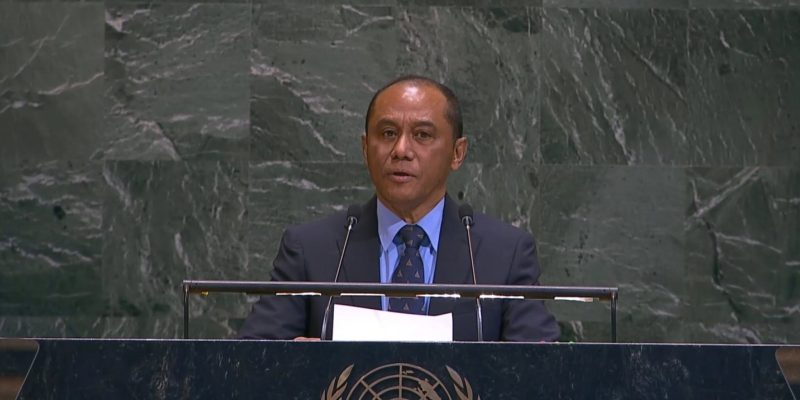
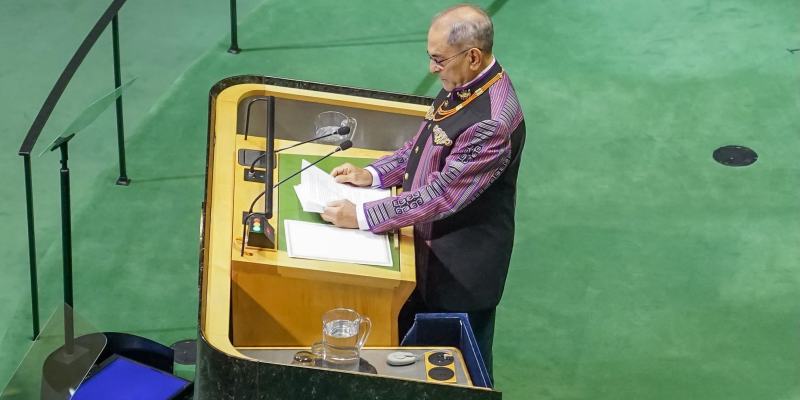
DÍLI, 25 September 2026 (TATOLI) – The Minister of Foreign Affairs and Cooperation, Bendito dos Santos Freitas, signed, on behalf of the Democratic Republic of Timor-Leste, the United Nations Convention against Cybercrime and the Optional Protocol to the International Covenant on Civil and Political Rights, as part of the Treaties Event held during the High-Level Week of the 81st Session of the United Nations General Assembly.
The United Nations Convention against Cybercrime establishes an international framework to strengthen the prevention and combating of certain crimes committed through information and communication technologies and to facilitate cooperation among States in criminal investigations and in the collection and sharing of electronic evidence related to serious crimes.
The signing of this treaty is part of a series of measures Timor-Leste has been implementing to strengthen the legal and institutional framework for preventing and combating cybercrime and to address the risks associated with the growing use of digital technologies.
In May this year, Timor-Leste hosted a delegation from the United Nations Office on Drugs and Crime (UNODC), led by the Regional Representative for Southeast Asia and the Pacific, Delphine Schantz. During a meeting with Agio Pereira, Minister of the Presidency of the Council of Ministers, the parties discussed the United Nations Convention against Cybercrime and the possibility of Timor-Leste signing it during the United Nations General Assembly, as well as UNODC’s provision of technical support for drafting national legislation in this area.
On the legislative front, the Government has been developing a national cybersecurity framework covering the prevention, investigation, and prosecution of cybercrime; the collection, preservation, and use of electronic evidence; the protection of critical infrastructure; the security of information systems and digital services; and national and international cooperation.
In July, the Council of Ministers approved the draft Law Proposal requesting legislative authorisation from the National Parliament to legislate on cybercrime and criminal procedure in the field of cybersecurity, and to establish the legal framework for the national cyberspace. The Government submitted the proposal to the National Parliament on July 31st.
The Government has also strengthened institutional coordination mechanisms in this area. In August, the Interministerial Commission on Cybersecurity and the Digitisation of Government Services was established, bringing together the relevant institutions to define and coordinate policies on cybersecurity, cyberspace regulation, data protection, the prevention and prosecution of cybercrime, and the digitisation of public services.
Also in August, the Council of Ministers approved the 2026–2031 National Integrated Plan for the Prevention and Combating of Transnational Digital Financial Scam Networks, Supported by Illegal Online Scam Platforms (SCAM), Organised Cybercrime, and Human Trafficking. The Plan establishes a coordinated response across intelligence agencies, law enforcement and security services, criminal investigation agencies, financial authorities, and border control agencies.
These measures complement the work carried out by national authorities—namely the Scientific Criminal Investigation Police and the National Police of Timor-Leste—in investigating crimes committed through digital means and in combating online scam networks, as well as the specialised training programmes on cybercrime investigation, digital forensics, and the handling of digital evidence delivered in recent years in partnership with international partners.
International cooperation has also included initiatives with UNODC, Australia, and other partners to strengthen national capacities, protect critical infrastructure, respond to cyber incidents, and combat transnational crime linked to digital technologies.
At the same Treaty Event, Minister Bendito dos Santos Freitas signed the Optional Protocol to the International Covenant on Civil and Political Rights. The Protocol complements the Covenant—to which Timor-Leste has been a State Party since 2003—and establishes a mechanism enabling individuals to submit communications to the United Nations Human Rights Committee under the Protocol.
The signing of these two treaties reinforces Timor-Leste’s participation in multilateral legal mechanisms for cooperation in combating cybercrime and for the international protection of civil and political rights.
TATOLI