



Author: Remigio Alexandre do Carmo Vieira (also known as Remigio Laka Vieira)
Institution: Atlantic International University – Master of Science in International Relations and Economic Development Year: 2025
Abstract
This article examines Timor-Leste’s strategic perspective on ASEAN integration and global diplomacy through the lens of moral diplomacy. As a young nation emerging from decades of conflict, Timor-Leste offers unique lessons in reconciliation, peacebuilding, and normative statecraft. Using qualitative analysis based on primary documents (ASEAN Charter, CAVR reports, UN resolutions) and secondary literature, the study demonstrates how small states can exert normative influence on regional and global peace. Timor-Leste’s approach emphasizes human-centered foreign policy, dialogue, and the promotion of justice and equality.
Keywords: Timor-Leste, ASEAN, moral diplomacy, global peace, small state theory, reconciliation.
- Introduction
Timor-Leste represents a unique case in international relations: a small state born from conflict and sustained by a moral vision of diplomacy. Following its independence in 2002, the nation has positioned itself not merely as a recipient of international support but as a proactive moral actor in Southeast Asia and beyond.
In a global context characterized by great-power rivalry, regional instability, and socio-economic inequalities, Timor-Leste offers a model of small-state diplomacy grounded in moral authority, reconciliation, and human dignity. This study argues that the nation’s experience of post-conflict recovery provides both practical and normative insights into the conduct of international relations, particularly within ASEAN.
- Literature Review and Theoretical Framework
2.1 Small State Theory
Small states are often perceived as limited in power and influence. However, Thorhallsson (2018) and Baldacchino (2010) argue that small states can exercise disproportionate influence through norm entrepreneurship and diplomatic innovation. Timor-Leste exemplifies this model by leveraging its historical legitimacy and moral authority to shape regional norms.
2.2 Moral Diplomacy
Originally conceptualized by Woodrow Wilson (1913), moral diplomacy emphasizes the use of ethical and value-based principles in foreign policy. In contemporary practice, moral diplomacy is not about power projection but about normative influence, mediation, and the promotion of justice.
2.3 Constructivist Perspective
From a constructivist perspective (Wendt, 1992), state identities and shared norms shape international outcomes. Timor-Leste’s identity as a reconciled, democratic state informs its foreign policy priorities and its commitment to ASEAN and global peace initiatives.
- Methodology
This study employs qualitative document analysis and comparative case study methods. Primary sources include:
ASEAN Charter (2008)
CAVR Report (2005)
United Nations resolutions and reports
National policy statements and speeches
Secondary sources include academic literature on moral diplomacy, small-state theory, and Southeast Asian regional integration. Data analysis involves thematic coding to identify the principles guiding Timor-Leste’s foreign policy and comparative evaluation of regional influence strategies.
- Analysis: Timor-Leste in ASEAN
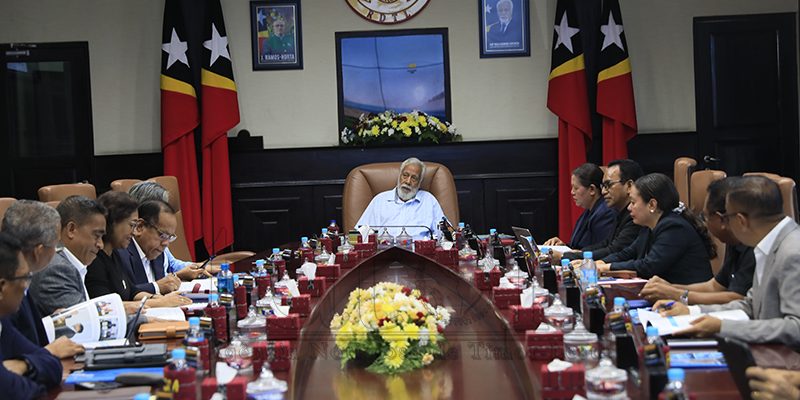
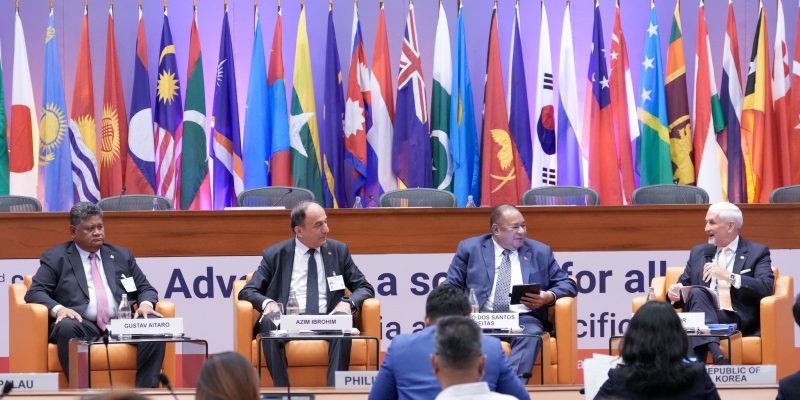
Timor-Leste’s accession to ASEAN represents more than diplomatic recognition; it embodies a moral contribution to regional governance. The analysis identifies three principal avenues:
- Peace Mediation and Conflict Resolution Drawing from its own post-conflict reconciliation process (CAVR), Timor-Leste can serve as a mediator in regional conflicts, including Myanmar and maritime territorial disputes.
- Human Rights and Democratic Promotion Timor-Leste contributes to strengthening ASEAN norms on human rights and democracy, advocating policies that align with people-centered governance rather than state-centric approaches.
- Inclusive Economic Development Timor-Leste’s experiences in rebuilding local economies and governance structures provide insights for promoting equitable development, particularly in ASEAN’s less-developed member states.
- Global Perspective and Normative Influence
Beyond ASEAN, Timor-Leste positions itself as a normative actor in the global arena. Its foreign policy priorities are grounded in:
Justice: Ensuring all states, regardless of size or power, have a voice in international governance.
Sustainability: Advocating development policies that balance growth with environmental and social responsibility.
Solidarity: Promoting cooperation across nations based on shared humanity rather than power competition.
Timor-Leste thus exemplifies a constructivist approach, where moral authority and normative legitimacy can influence regional and global governance outcomes.
- Findings
Small states can exert moral and normative influence, compensating for limited material power.
Timor-Leste’s post-conflict reconciliation process provides a replicable model for peacebuilding in other Southeast Asian contexts.
ASEAN and the international community benefit from integrating moral diplomacy principles alongside economic and security cooperation.
- Conclusion
Timor-Leste illustrates that moral authority, historical legitimacy, and reconciliation experience can position small states as key contributors to regional and global peace. Its approach aligns with ASEAN’s vision of a stable, inclusive community and contributes to a normative order in international relations that prioritizes justice, dialogue, and human dignity.
“Peace is not the absence of war, but the presence of justice, equality, and respect among nations.”
Timor-Leste’s experience demonstrates that even small nations can shape the future of diplomacy by embedding moral principles at the heart of foreign policy.
References (APA 7th Edition)
Acharya, A. (2014). Constructing a Security Community in Southeast Asia: ASEAN and the Problem of Regional Order. Routledge.
Baldacchino, G. (2010). Small States and International Relations. Routledge.
CAVR. (2005). Chega! The Report of the Commission for Reception, Truth and Reconciliation in Timor-Leste. Dili: CAVR.
Emmers, R. (2018). ASEAN and the Security of Southeast Asia: Regional Multilateralism in the Post-Cold War Era. Routledge.
Rees, L. (2010). Small States in the International System. European Journal of International Relations, 16(2), 303–326.
Thorhallsson, B. (2018). Small States in the Global System: Political and Economic Perspectives. Routledge.
United Nations Development Programme (UNDP). (2020). Human Development Report: The Next Frontier – Human Development and the Anthropocene. UNDP.
United Nations Peacekeeping. (2018). Guidelines on Post-Conflict Reconciliation and Peacebuilding. UN Publications.
United Nations. (1945). Charter of the United Nations. New York: UN.
Wendt, A. (1992). Anarchy is What States Make of It: The Social Construction of Power Politics. International Organization, 46(2), 391–425.
Wilson, W. (1913). Moral Diplomacy. The New York Times.
ASEAN. (2008). ASEAN Charter. Jakarta: ASEAN Secretariat.