


President Jose Ramos-Horta calls for urgent action on energy security and transition at the Asia Zero-Emission Community Plus
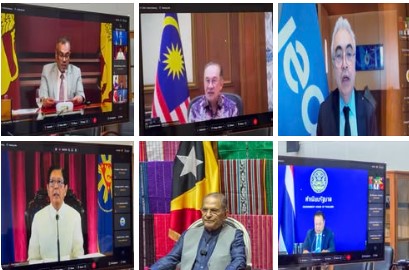
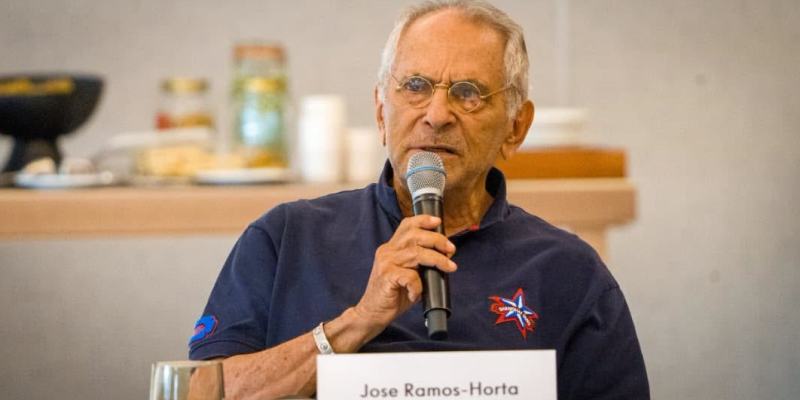
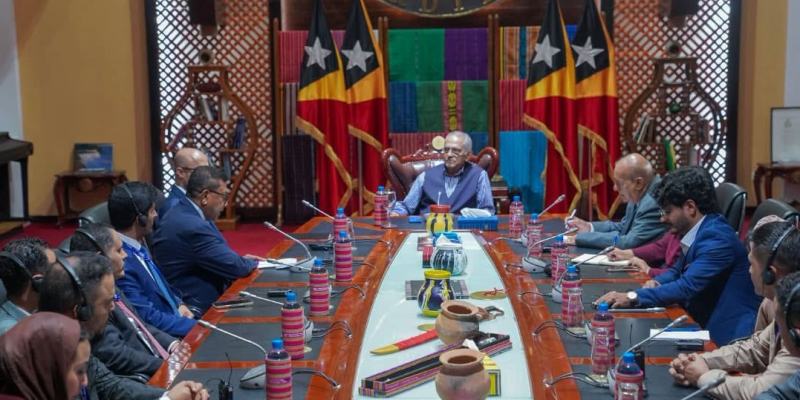
DILI, 16 April 2026 (TATOLI) – The President of the Republic, Jose Ramos-Horta on Wednesday addressed the AZEC Plus Online Summit on Energy Resilience, speaking from Nicolau Lobato Presidential Palace.
AZEC initiated by Japan in 2022 and launched by 11 partner countries in 2023, serves as a platform to advance decarbonization in Asia toward carbon neutrality while achieving economic growth and energy security, creating various pathways tailored to each country’s circumstances.
The AZEC Plus Online Summit 2026 hosted by the Prime Minister of Japan, TAKAICHI Sanae, attended by leaders of the Asian region including partners of the AZEC.
Participants included: Ferdinand R. Marcos, President of the Republic of the Philippines: Dato’ Seri Anwar bin Ibrahim, Prime Minister of Malaysia: Lawrence WONG, Prime Minister and Minister for Finance of the Republic of Singapore: Anutin CHARNVIRAKUL, Prime Minister and Minister of Interior of the Kingdom of Thailand: Le Minh HUNG, Prime Minister of the Socialist Republic of Viet Nam: Jose RAMOS-HORTA, President of Timor-Leste: Tarique Rahman, Prime Minister of the People’s Republic of Bangladesh; KIM Min-seok, Prime Minister of the Republic of Korea. The summit was also attended by other senior government representatives from Australia, Brunei, Cambodia, Indonesia, India and Sri lanka, as well as representatives from the International Energy Agency (IEA), the Asian Development Bank (ADB), and Economic Research Institute for ASEAN and East Asia (ERIA).
Prime Minister TAKAICHI Sanae in her opening remarks emphasized that Asian countries are most affected by supply disruptions in the Strait of Hormuz and must collaborate to address this shared challenge due to their interconnected supply chains. Prime Minister then announced the launch of “Partnership On Wide Energy and Resources Resilience (POWERR Asia),” a new framework combining emergency and long-term structural responses, including financing for crude oil and petroleum product procurement, maintaining supply chains, establishing stockpiling and release systems, expanding regional crude oil reserves through storage tanks, securing critical minerals, diversifying energy sources like biofuels, and promoting industrial energy savings.
The initiative includes approximately $10 billion in financial cooperation, equivalent to about one year’s crude oil imports for ASEAN countries.
President J. Ramos-Horta stated that the energy crisis is an immediate threat to fiscal stability, livelihoods, and national security. The President outlined emergency measures already undertaken by the Timor-Leste government, including the purchase of eighty million litres of additional diesel reserves at a cost of one hundred and seventy million dollars, the introduction of price caps, and contingency plans for rationing. He cautioned that while these steps buy time, they are emergency measures, not lasting solutions.
President Ramos-Horta welcomed Japan’s proposed two-pronged approach addressing both the immediate crisis and structural vulnerabilities. In the short term, President identified access to financing for fuel purchases and supply chain strengthening as critical lifelines for nations like Timor-Leste to maintain electricity supply, protect households, avoid difficult fiscal trade-offs, and safeguard agricultural output and food security.
Looking to the medium and long term, the President endorsed the evolution toward AZEC 2.0, noting that the current crisis proves energy security and energy transition are inseparable.
“Our electricity system currently depends almost entirely on imported diesel. As global prices rise and supply chains tighten, the impact is direct: increased fiscal pressure, higher cost of living, and growing risks to energy security,” stated President Ramos-Horta.
“For Timor-Leste, reducing dependence on imported diesel through investment in renewable energy and storage is not only a climate priority — it is an economic and strategic necessity.”
The President acknowledged Japan’s past support in bringing solar power to rural communities and highlighted ongoing progress toward a major solar power plant backed by joint investment from Japanese firm Itochu and Électricité de France.
President J. Ramos-Horta concluded his intervention by affirming that Timor-Leste stands ready to work with Japan, ASEAN partners, and all participants to advance both energy security and the clean energy transition.
TATOLI