


Timorese Journalists’ Delegation highlights media’s role in strengthening Timor-Leste-China ties
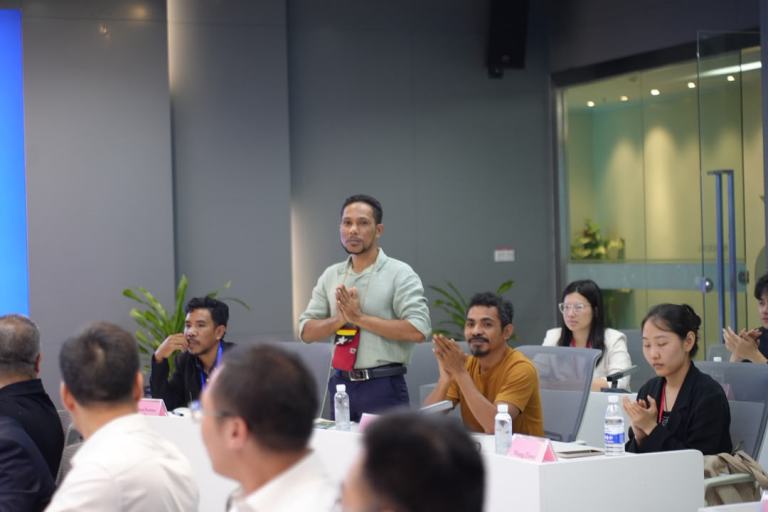
GUANGXI, 28 July 2026 (TATOLI) — Zezito da Silva, Vice President of the Board for Media and Journalism at the Timor-Leste News Agency and head of the 24-member Timorese journalists’ delegation, highlighted the importance of strengthening cooperation between Timor-Leste and China through multicultural exchange and media innovation during a speech at Guangxi Minzu University.
Speaking on behalf of the Timor-Leste delegation during a visit to Guangxi Minzu University, at a dialogue themed “Promoting Multicultural Exchange and Media Innovation,” da Silva said media and cultural exchange are essential to strengthening mutual understanding and shaping the future of bilateral relations.
“It is a great honor and a true privilege for me to representing the 24 journalist’s from Timor-Leste here today at the beautiful campus of ‘Guangxi Minzu University’.”
Da Silva said the visit was made possible through the support of the Government of Timor-Leste, particularly the Secretary of State for Social Communication (SECOMS), where he serves, as well as the Embassy of China in Dili and CICG.
He thanked the organisers for facilitating what he described as a meaningful and impactful exchange programme.
“The 24 journalists from Timor-Leste are truly happy and deeply impressed by the excellent organization and strong support provided by CICG and all partners involved. This experience has been not only a professional journey, but also a valuable learning opportunity for all of us.”
Highlighting the significance of the dialogue’s theme, da Silva said the discussions extended beyond academic exchange.
“The delegation of 24 journalist’s from Timor-Leste to joint this important dialogue of theme today is: ‘Promoting Multicultural Exchange and Media Innovation.’ This is not just a theme. This is the pathway to our future.”
He stressed that media and culture have become increasingly interconnected in today’s world.
“Because in today’s world, culture and media can no longer be separated. Media is the ‘bridge’ that helps us understand each other. And multicultural exchange is the ‘heart’ that helps us respect each other.”
Da Silva said Guangxi Minzu University, which brings together students from China’s 56 ethnic groups, provides an ideal environment for intercultural learning.
He noted that Timor-Leste is also a multicultural country with more than 30 local languages and is the newest member of ASEAN, creating opportunities for deeper educational and cultural collaboration.
Describing the potential for mutual learning, he said Chinese students could explore Timor-Leste’s traditional tais weaving and tebe storytelling traditions, while Timorese students could learn from China’s advances in artificial intelligence, livestreaming technologies and international media production.
He proposed expanding collaboration between students and journalists from both countries.
“My proposal is simple: ‘From Guangxi to Timor, From Timor to Guangxi. Let’s exchange our stories, and let’s create content together.'”
According to da Silva, such cooperation would generate three key benefits: promoting mutual understanding, encouraging media innovation by combining China’s digital technologies with Timor-Leste’s cultural heritage, and strengthening the long-term partnership between the two countries.
“First, we promote mutual understanding. When we tell each other’s stories, we break stereotypes.
Second, we drive media innovation. By combining Guangxi’s digital technology with Timor’s unique culture, we can create new content for TikTok, YouTube, and the world.
Third, we build the future of China-Timor-Leste relations. Because the next 50 years of our friendship will be built by the timorese journalist’s in this room.”
Concluding his remarks, da Silva thanked Guangxi Minzu University for its hospitality and commitment to international communication.
“I truly believe that this partnership will create new innovations in media and build a strong and lasting friendship between our journalist’s.”
TATOLI